
October 15, 2026 · 11 min read
Thai-English Menu Descriptions: 20 Restaurant Examples
Use 20 Thai-English dish descriptions, recipe notes and a blank template to write a clearer restaurant menu, then review the wording in iMango.
iMango Team
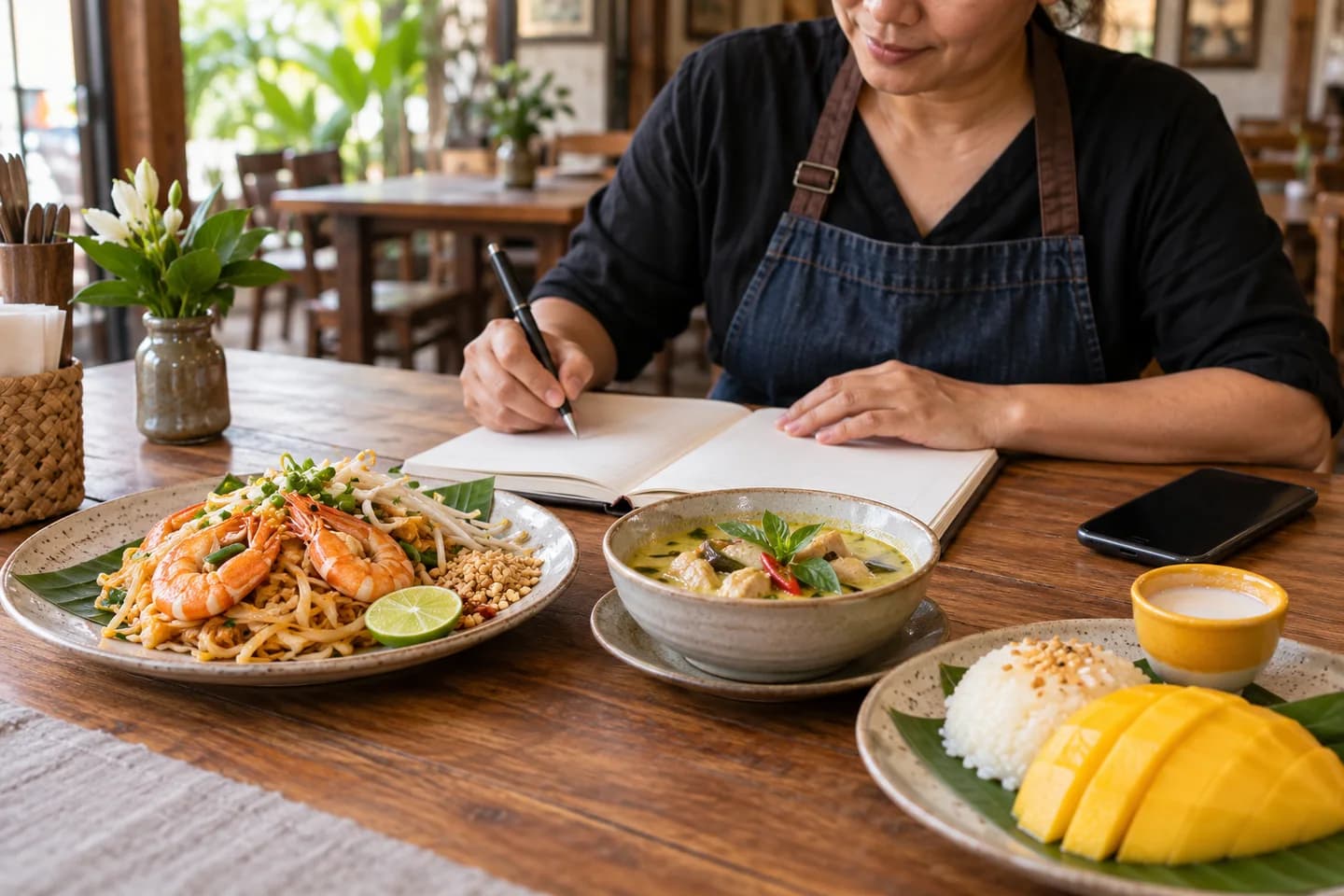
A useful English description of a Thai dish tells the guest what they will receive: the main ingredients, cooking method and serving arrangement. Keep a recognizable name such as Pad Thai or Khao soi, then explain it in one plain sentence.
Below are 20 Thai-English examples you can adapt for your restaurant. Each row describes a particular recipe and serving arrangement, not every version of that dish. Compare it with your kitchen before copying it. These short descriptions are not complete ingredient lists or allergen records.
Use this pattern: dish name + main ingredient + cooking method or sauce + what is served with it. Add a spice or portion note when it changes the guest's decision. For the broader menu-language workflow, see the multilingual menu guide for tourists.
20 Thai-English menu description examples
Both columns include the item name and a description. In a digital menu, place the name in the item-name field and the sentence in the description field. The numbered rows make it easy to check the pair with your chef.
Rice and stir-fried noodles: examples 1–5
| Thai name and description | English name and description |
|---|---|
| 1. ผัดไทยกุ้ง — เส้นจันท์ผัดกับกุ้ง ไข่ เต้าหู้ ถั่วงอก และกุยช่าย ปรุงรสด้วยมะขามเปียกและน้ำปลา เสิร์ฟพร้อมถั่วลิสงบดและมะนาว | Prawn Pad Thai — Rice noodles stir-fried with prawns, egg, tofu, bean sprouts and garlic chives in a tamarind and fish sauce dressing, served with crushed peanuts and lime. |
| 2. ผัดซีอิ๊วไก่ — เส้นใหญ่ผัดกับไก่ ไข่ และคะน้า ปรุงรสด้วยซีอิ๊ว เสิร์ฟเป็นอาหารจานเดียว | Chicken Pad See Ew — Wide rice noodles stir-fried with chicken, egg and Chinese broccoli in a savory soy sauce, served as a single plate. |
| 3. ข้าวกะเพราหมูสับ — หมูสับผัดกับพริก กระเทียม ใบกะเพรา และน้ำปลา เสิร์ฟพร้อมข้าวหอมมะลิ ไข่ดาวสั่งเพิ่มได้ | Pork Pad Krapao with Rice — Minced pork stir-fried with chili, garlic, holy basil and fish sauce, served with jasmine rice. A fried egg is available as an extra. |
| 4. ข้าวผัดไก่ — ข้าวหอมมะลิผัดกับไก่ ไข่ หอมใหญ่ และต้นหอม ปรุงรสด้วยซีอิ๊ว เสิร์ฟพร้อมแตงกวาและมะนาว | Chicken Fried Rice — Jasmine rice stir-fried with chicken, egg, onion and spring onion, seasoned with soy sauce and served with cucumber and lime. |
| 5. ผัดขี้เมาทะเล — เส้นใหญ่ผัดกับกุ้ง ปลาหมึก พริก กระเทียม และใบกะเพรา ปรุงรสด้วยน้ำปลาและซอสหอยนางรม รสเผ็ด | Seafood Pad Kee Mao — Wide rice noodles stir-fried with prawns, squid, chili, garlic and holy basil in a fish sauce and oyster sauce seasoning. A spicy noodle dish. |
Check your version: change the noodle type, protein and sauce to match what you cook. Example 1 lists selected ingredients; some Pad Thai recipes also include dried shrimp, as in THAI SELECT's recipe. Record that ingredient if your kitchen uses it. In example 3, “holy basil” means กะเพรา, not โหระพา. Keep the fried egg as an extra only if that is how your restaurant sells it.
Soups and curries: examples 6–10
| Thai name and description | English name and description |
|---|---|
| 6. ต้มยำกุ้งน้ำใส — กุ้งและเห็ดในน้ำซุปรสเผ็ดเปรี้ยว หอมตะไคร้ ข่า และใบมะกรูด ปรุงรสด้วยมะนาว พริก และน้ำปลา | Clear-Broth Tom Yum Prawns — Prawns and mushrooms in a hot and sour clear broth with lemongrass, galangal and makrut lime leaves, seasoned with lime, chili and fish sauce. |
| 7. ต้มข่าไก่ — ไก่และเห็ดในน้ำกะทิ หอมข่า ตะไคร้ และใบมะกรูด ปรุงรสด้วยน้ำปลา มะนาว และพริก | Tom Kha Chicken — Chicken and mushrooms simmered in coconut milk with galangal, lemongrass and makrut lime leaves, seasoned with fish sauce, lime and chili. |
| 8. แกงเขียวหวานไก่ — แกงเขียวหวานกะทิใส่ไก่ มะเขือ และใบโหระพา ปรุงรสด้วยน้ำปลา เสิร์ฟพร้อมข้าวหอมมะลิ | Chicken Green Curry — Chicken and Thai eggplant simmered in green curry with coconut milk, Thai basil and fish sauce, served with jasmine rice. |
| 9. แกงเผ็ดเต้าหู้ — แกงเผ็ดกะทิใส่เต้าหู้ หน่อไม้ และใบโหระพา ปรุงรสด้วยน้ำปลา เสิร์ฟพร้อมข้าวหอมมะลิ | Tofu Red Curry — Tofu and bamboo shoots simmered in red curry with coconut milk, Thai basil and fish sauce, served with jasmine rice. |
| 10. มัสมั่นไก่ — ไก่ตุ๋นในแกงมัสมั่นกะทิใส่มันฝรั่ง หอมใหญ่ และถั่วลิสง หอมเครื่องเทศ เสิร์ฟพร้อมข้าวหอมมะลิ | Chicken Massaman Curry — Chicken simmered in a coconut milk curry with potatoes, onion, peanuts and aromatic spices, served with jasmine rice. |
Check your version: name the broth accurately. Example 6 is clear-broth Tom Yum; a creamy version may use evaporated milk and chili paste, as described in THAI SELECT's Tom Yum notes. If yours includes milk, state that in your ingredient and allergen information. Example 9 assumes fish sauce and a curry paste containing shrimp paste, so the tofu does not make it vegetarian. Check every curry paste, stock and seasoning. In examples 8–10, rice is included; remove that wording if it is sold separately.
Salads and small plates: examples 11–15
| Thai name and description | English name and description |
|---|---|
| 11. ส้มตำไทย — มะละกอดิบตำกับมะเขือเทศ ถั่วฝักยาว พริก และกระเทียม ปรุงรสด้วยมะนาวและน้ำปลา ใส่กุ้งแห้งและถั่วลิสง | Som Tam Thai — Shredded green papaya pounded with tomato, long beans, chili and garlic in a lime and fish sauce dressing, with dried shrimp and peanuts. |
| 12. ลาบหมู — หมูสับสุกคลุกกับมะนาว น้ำปลา พริกป่น ข้าวคั่ว หอมแดง และสะระแหน่ เสิร์ฟพร้อมผักสด | Pork Laab — Cooked minced pork tossed with lime, fish sauce, chili flakes, toasted rice powder, shallots and mint, served with fresh vegetables. |
| 13. ยำวุ้นเส้นกุ้ง — วุ้นเส้นและกุ้งคลุกกับน้ำยำมะนาว พริก และน้ำปลา ใส่หอมใหญ่ มะเขือเทศ และขึ้นฉ่าย | Prawn Glass Noodle Salad — Glass noodles and prawns tossed in a lime, chili and fish sauce dressing with onion, tomato and Chinese celery. |
| 14. สะเต๊ะไก่ — ไก่หมักด้วยเครื่องเทศและกะทิ เสียบไม้ย่าง เสิร์ฟ 4 ไม้ พร้อมน้ำจิ้มถั่วลิสงและอาจาดแตงกวา | Chicken Satay — Four grilled chicken skewers marinated in spices and coconut milk, served with peanut sauce and a sweet-sour cucumber relish. |
| 15. ทอดมันปลา — เนื้อปลาบดผสมพริกแกง ถั่วฝักยาว และใบมะกรูด ทอดเป็นชิ้น เสิร์ฟ 5 ชิ้น พร้อมน้ำจิ้มหวานใส่แตงกวา | Thai Fish Cakes — Five fried fish cakes made with red curry paste, long beans and makrut lime leaves, served with a sweet cucumber dipping sauce. |
Check your version: example 11 is a Som Tam Thai recipe with dried shrimp and peanuts, consistent with THAI SELECT's ingredient list. Other versions can use fermented fish sauce or salted crab; name the version you actually serve. Example 12 specifies cooked pork. Add minced pork to example 13 if your recipe includes it. Check whether the fish-cake mixture or dip contains egg or peanuts, and replace the four-skewer and five-piece counts with your actual portions.
Rice dishes, dessert and drinks: examples 16–20
| Thai name and description | English name and description |
|---|---|
| 16. ข้าวมันไก่ — ไก่ต้มเสิร์ฟบนข้าวหุงด้วยน้ำซุปไก่ พร้อมแตงกวา น้ำจิ้มเต้าเจี้ยวใส่ขิงและพริก และซุปใสถ้วยเล็ก | Khao Man Gai — Poached chicken over rice cooked in chicken broth, served with cucumber, a ginger-chili fermented soybean dip and a small clear soup. |
| 17. ข้าวซอยไก่ — บะหมี่ไข่ในน้ำแกงกะทิใส่ไก่ โรยบะหมี่กรอบ เสิร์ฟพร้อมผักกาดดอง หอมแดง และมะนาว | Chicken Khao Soi — Egg noodles in a Northern Thai coconut curry broth with chicken and crispy noodles, served with pickled mustard greens, shallots and lime. |
| 18. ข้าวเหนียวมะม่วง — ข้าวเหนียวมูนกะทิเสิร์ฟพร้อมมะม่วงสุกและน้ำกะทิราด เป็นของหวาน 1 ที่ | Mango Sticky Rice — Sweet coconut sticky rice served with ripe mango and a coconut sauce, as an individual dessert portion. |
| 19. บัวลอย — แป้งข้าวเหนียวปั้นเป็นเม็ดเล็ก ต้มในน้ำกะทิหวาน เสิร์ฟอุ่นเป็นของหวาน 1 ถ้วย | Bua Loi — Small glutinous rice flour balls in sweet coconut milk, served warm as an individual dessert bowl. |
| 20. ชาไทยเย็น — ชาไทยชงเข้มผสมนมข้นหวานและนมข้นจืด เสิร์ฟใส่น้ำแข็ง 1 แก้ว | Thai Iced Tea — Strong brewed Thai tea mixed with sweetened condensed milk and evaporated milk, served over ice as one glass. |
Check your version: Khao Man Gai here includes a dip and soup. Keep the egg-noodle detail in Khao Soi if it matches your dish; Pailin Chongchitnant's recipe explains that noodle type. Check dessert toppings, added egg and serving temperature. Bua Loi uses glutinous rice flour balls, not tapioca pearls. Example 20 is a dairy version, like the Thai iced tea recipe from Hot Thai Kitchen; update both languages if your milk or tea mix differs.
A blank template for your own dishes
Start with facts from the kitchen, then write the two descriptions. A familiar transliteration is useful, but the explanation should work for a guest who has never heard the name.
English:
Name: [Thai name] / [English]
Ingredients: [Protein, veg]
Method: [Stir-fried/grilled]
Sauce/broth: [Ingredients]
Served with: [Included sides]
Portion: [Count or size]
Heat: [Confirmed by kitchen]
Choices: [Options and extras]

Description:
[Main ingredient] [method]
with [ingredients or sauce].
Served with [included sides].
Thai:
ชื่อ: [ชื่อไทย] / [ชื่ออังกฤษ]
วัตถุดิบหลัก: [เนื้อสัตว์ ผัก]
วิธีปรุง: [ผัด ย่าง ตุ๋น]
ซอสหรือน้ำแกง: [ส่วนผสมจริง]
เสิร์ฟพร้อม: [สิ่งที่รวมในราคา]
ปริมาณ: [จำนวน ขนาด หรือสำหรับกี่คน]
ความเผ็ด: [ข้อมูลที่ครัวยืนยัน]
ตัวเลือก: [สิ่งที่เลือกหรือสั่งเพิ่มได้]

คำอธิบาย:
[วัตถุดิบหลัก] [วิธีปรุง]
กับ [ส่วนผสมสำคัญหรือซอส]
เสิร์ฟพร้อม [สิ่งที่รวมในราคา]
Keep the final guest sentence shorter than your kitchen record. Put selectable sizes, protein choices and paid extras in the relevant options instead of repeating every possible combination in the description.
Replace unclear English with concrete wording
These revisions describe the example recipes above. They still need checking against your restaurant.
| Unclear wording | More useful wording |
|---|---|
| Basil pork | Minced pork stir-fried with chili, garlic and holy basil, served with jasmine rice. |
| Coconut soup | Chicken and mushrooms in coconut milk with galangal, lemongrass and lime. |
| Drunken noodles | Wide rice noodles stir-fried with prawns, squid, chili, garlic and holy basil. |
| Jelly balls | Glutinous rice flour balls in sweet coconut milk, served warm. |
Words such as “delicious,” “special” and “authentic” do not explain the protein, cooking method or portion. Use a description that staff can point to when a guest asks what is in the dish. The wrong-order menu guide helps you choose which confusing items to rewrite first.
Check the actual recipe before adding dietary labels
Give the chef or kitchen lead both language versions and the ingredient record. Check the stock, curry paste, sauces, marinades, toppings and dips, including packaged ingredients. A description that mentions only the main protein can leave out fish sauce, shrimp paste or dairy.
- Do not label a tofu curry vegetarian if its sauce or paste contains fish or shrimp.
- Do not infer “gluten-free” from rice noodles or glutinous rice flour. Check the complete recipe and preparation.
- Do not infer halal certification from a chicken dish or the absence of pork in its description.
- Keep ingredient and allergen information separate from this short writing template, and update it when the kitchen changes the recipe.
For a practical ingredient-recording reference, the UK Food Standards Agency's allergen guidance for food businesses covers recipes, ingredient labels and recipe changes. Its legal requirements apply in its jurisdiction; use the requirements that apply where your restaurant operates.
Describe options the kitchen can actually honor
“Choose your protein,” “mild available” and “add a fried egg” are promises about the order. Add them only when the kitchen can provide those choices.
For example 3, keep Pork Pad Krapao with Rice if pork is the only base recipe. If chicken is also available, make the choice visible and translate its label. Keep the fried egg as a separate extra when it has an additional charge. Do not describe it as included while charging for it in the options.
For curry made from a prepared spicy base, do not promise “no chili” unless the kitchen can make a separate version. For Thai iced tea mixed in advance, confirm which sweetness adjustments remain possible. A translated item with untranslated choices is still an unfinished guest menu.
Put the reviewed descriptions into iMango
Once the examples match your kitchen, use iMango's restaurant menu translation workspace to maintain the wording in your menu.
- Confirm Thai and English are enabled in your restaurant settings.
- Open the menu item and enter its Thai name and description in the Thai fields.
- Enter the reviewed English name and sentence in the English fields. You can use the examples directly after adapting them to your recipe.
- If you want translation assistance for other empty fields, select the language containing your source text and click Translate. It fills only empty fields for enabled languages visible in that form. Existing non-empty translations are preserved; typing or saving does not trigger translation.
- Review names and descriptions separately. Check price-option labels, option-group names and individual choices too. Allergen and dietary tags are separate selections; the translation helper does not verify or certify them.
- Save, then open the public menu on a phone. Select Thai and English and compare the dish name, description, photo, included sides, sizes, extras and price. Open item details as well as the menu card.
For a fuller review process, use the AI menu translation checklist. For the complete menu setup, follow how to create a restaurant QR menu.
A final phone check before guests use the menu
- Can a new guest identify the protein and cooking method from the first sentence?
- Are the two languages describing the same recipe, included sides and portion?
- Do long names and descriptions fit the mobile screen without hiding useful information?
- Do the photo, price options and extras agree with the description?
- Can guests read every selectable option in the chosen language?
- Has the kitchen checked ingredient information and any dietary claims separately?
Start with five frequently ordered dishes, check them with your kitchen and staff, then continue through the menu. Keep the approved Thai-English pairs as a reference whenever the recipe or serving arrangement changes.
Frequently asked questions
Should I translate Thai dish names or keep their local names?
Keep a recognizable local name when it helps guests identify the dish, and add a plain English explanation. “Chicken Khao Soi” plus an egg-noodle and coconut-curry description is clearer than either “Khao Soi” alone or a vague “curry noodles.”
Can I copy these 20 descriptions into my restaurant menu?
Yes, after changing the ingredients, sauces, serving arrangement, heat and portion to match your kitchen. The examples are writing templates for specific recipe variants, not verified descriptions of your restaurant's food or complete allergen records.
How long should an English menu description be?
Use one or two short sentences that explain the dish and what comes with it. There is no universal word count. Check the actual phone layout and keep selectable choices in their own labels rather than crowding them into a paragraph.
Does a tofu or rice-noodle dish automatically qualify as vegetarian or gluten-free?
No. Sauces, curry paste, stock, toppings and preparation can change the answer. Verify the complete recipe and kitchen practices before making a dietary claim; do not infer it from the dish name or main ingredient.
Will iMango Translate replace English wording I have already reviewed?
No. It fills only empty fields for enabled languages visible in the current form. Existing non-empty translations remain. To revise a filled English description, edit that field yourself and review the result before saving.
What should I check after changing a recipe?
Update both language descriptions, ingredient and allergen information, dietary tags, options and photos where relevant. Open the public menu in each language and check that guests see the new recipe and serving arrangement.