
May 9, 2026 · 13 min read
How an AI Translated Restaurant Menu Attracts Global Diners
Learn how an AI translated restaurant menu helps global diners order with confidence, understand local dishes, avoid allergens, and spend more comfortably.
iMango Team
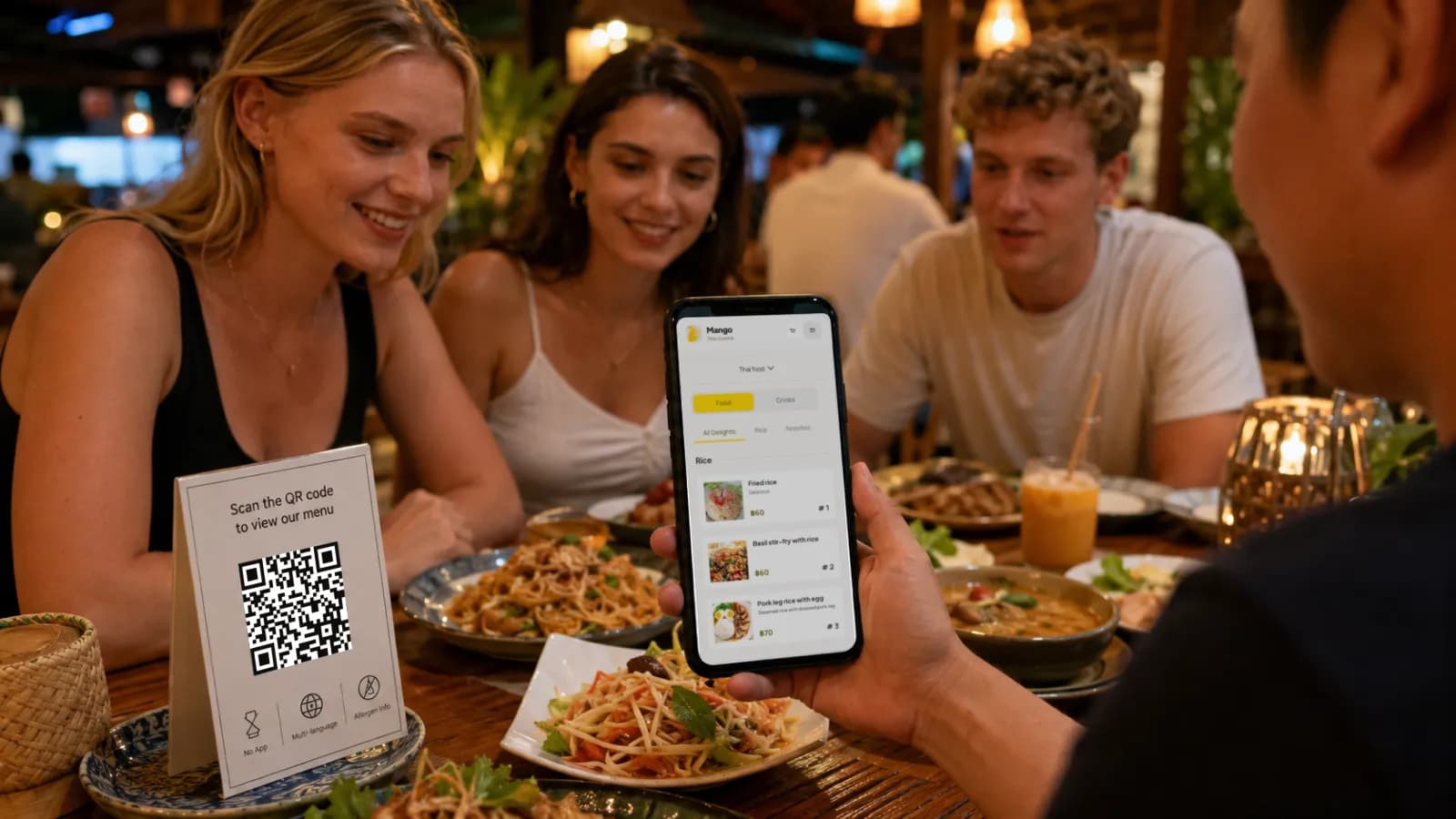
Short answer: an AI translated restaurant menu attracts global diners by making unfamiliar dishes easier to understand, easier to trust, and easier to order. It turns a local menu into a clearer buying experience for guests who do not share the restaurant's language, food habits, or assumptions about ingredients.
That does not mean AI should publish every translation without review. Restaurant menus are too sensitive for blind automation. A dish name may carry local identity. A sauce may contain fish, peanuts, sesame, dairy, or shellfish. A "mild" dish in one cuisine may still feel hot to a traveler. A literal translation can be technically correct and still fail at the table.
The useful version is more practical: use AI to translate the first draft quickly, then let the restaurant review the terms that affect trust, safety, and sales. When that translated menu lives behind a mobile-first QR code, every edit can stay current without reprinting five language versions.
For tourist-heavy restaurants, that combination is powerful. Global travel is active again: UN Tourism reported 1.52 billion international tourists in 2025, up 4% from 2024, and expects continued growth in 2026. Thailand alone recorded 9.31 million international arrivals in the first quarter of 2026, with China, Malaysia, Russia, India, and South Korea among the largest source markets. Guests are crossing borders. Menus have to cross languages.
Why AI menu translation is becoming a restaurant operations tool
AI has entered restaurant operations through booking, marketing, analytics, inventory, staff scheduling, and customer service. Menu translation is one of the simplest and most visible use cases because it touches the guest before they order.
The old way was slow:
- Export the menu.
- Send it to a translator or ask a bilingual staff member.
- Create separate files for each language.
- Print or upload each version.
- Repeat whenever prices, dishes, or descriptions change.
That workflow breaks down when the menu changes often. Seasonal dishes appear. Imported ingredients get more expensive. A seafood dish sells out. A new dessert needs a better description. A spelling mistake appears in the English version but not the Thai version. After a few weeks, the translated menu is no longer the same menu guests are actually ordering from.
AI translation changes the starting point. It can turn structured menu content into draft translations in minutes instead of days. The restaurant still needs to check the important parts, but the slowest step is no longer the first translation pass.
This matters most for restaurants that serve:
- tourists who may not speak the local language;
- international neighborhoods;
- hotels, resorts, airports, beach areas, and tour districts;
- dishes with unfamiliar names or ingredients;
- menus that change often;
- small teams without bilingual staff on every shift.
In those settings, a translated menu is not decoration. It is part of service.
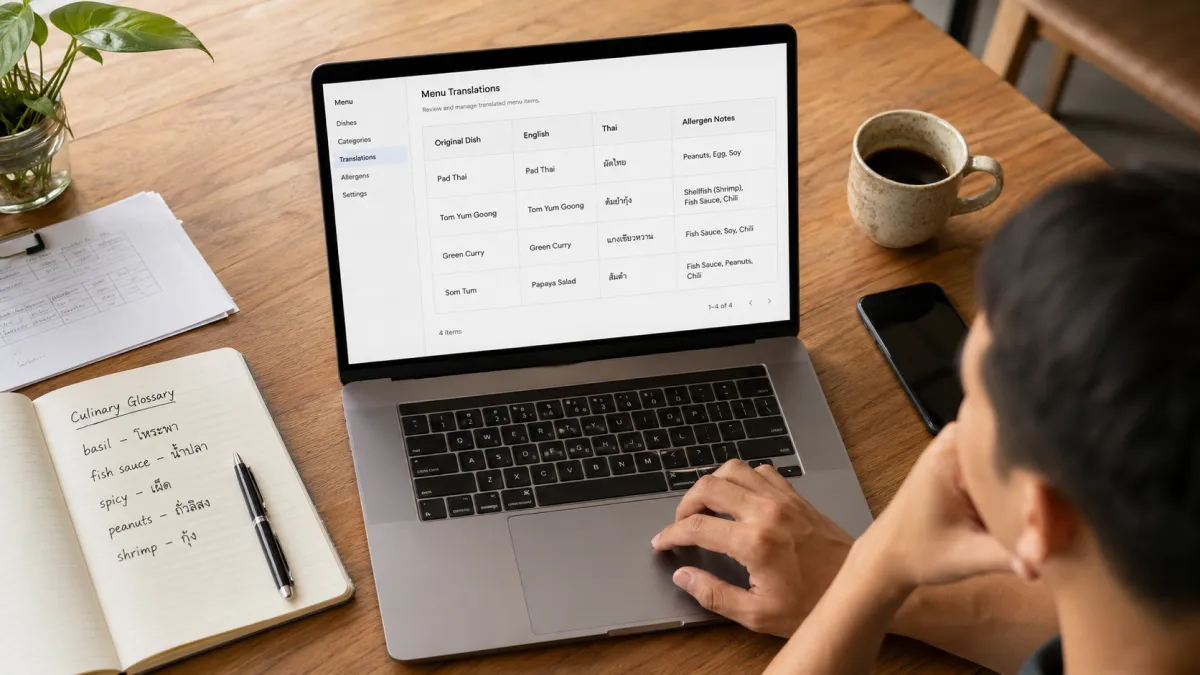
What global diners need from a translated menu
Most guests do not need poetry. They need confidence.
A global diner opening a menu in Bangkok, Phuket, Chiang Mai, Pattaya, Tokyo, Rome, Barcelona, or New York is usually trying to answer simple questions:
| Guest question | What the translated menu should show |
|---|---|
| What is this dish? | A plain explanation of the ingredients and cooking method |
| Is it local, familiar, or adventurous? | The original dish name plus a short description |
| Is it spicy? | Spice level and whether it can be adjusted |
| Is it safe for me? | Allergen notes and dietary tags |
| Is it a main dish or a side? | Portion cue such as snack, main, shared dish, set, or dessert |
| What can I customize? | Size, protein, spice, sweetness, milk type, toppings, or doneness |
| Is it available now? | Sold-out, seasonal, limited, lunch-only, or dinner-only labels |
If the menu answers these questions, guests order with less hesitation. If it does not, they play safe. They choose the familiar item, the cheapest item, or the item with a photo. That is not because they lack curiosity. It is because the menu has not earned enough trust.
How AI translation handles culinary terms
Good AI menu translation is not just word-for-word replacement. It works best when the menu gives the model enough context to understand what each word is doing.
For example, the English word "crab" may be an ingredient, a topping, a category, or part of a dish name. "Hot" can mean temperature or spice. "Cream" may mean dairy, texture, or dessert style. "Set" may mean a meal bundle, not the verb "to place." In Thai food, terms such as "pad", "tom", "yam", "khao", "moo", "gai", and "pla" carry cooking or ingredient meaning that should not always disappear.
The strongest AI workflow uses structured fields:
| Menu field | Why it improves translation |
|---|---|
| Category | Gives context: soup, salad, dessert, drink, breakfast, side |
| Original item name | Preserves brand and local identity |
| Short description | Explains ingredients and cooking method |
| Options | Keeps size, toppings, protein, and spice choices clear |
| Allergen notes | Separates safety information from marketing copy |
| Dietary tags | Makes vegetarian, vegan, halal, gluten-sensitive, and spicy labels consistent |
| Glossary terms | Forces preferred translations for signature names and sensitive terms |
This is why a proper digital menu is easier to translate than a flat PDF. A PDF gives the translation tool a block of text. A structured menu tells the tool what each piece means.
Glossaries are especially important. Google Cloud Translation describes a glossary as a custom dictionary for domain-specific terms. In restaurant language, that means you can decide which words should stay in the original language, which need explanation, and which should always use the same translation.
Examples:
| Original term | Weak translation risk | Better menu treatment |
|---|---|---|
| Khao soi | "Northern curry noodles" only | Keep "Khao soi" and add "Northern Thai curry noodle soup" |
| Som tam | "Papaya salad" only | Keep "Som tam" and explain chili, lime, fish sauce, peanuts |
| Nam prik | "Chili water" | Explain as "Thai chili relish served with vegetables" |
| Moo ping | "Pig skewer" | Use "Grilled pork skewers" |
| Pla ra | "Fermented fish" without context | Explain clearly and mark strong flavor |
| Pad kra pao | Over-translated or inconsistent | Keep local name plus "stir-fried holy basil with..." |
The goal is not to make every dish sound foreign or every dish sound Western. The goal is to help the guest understand what they are ordering while preserving what makes the dish local.
AI translation vs traditional menu translation
AI translation and human translation are not enemies. They solve different parts of the problem.
| Approach | Best for | Weakness |
|---|---|---|
| Generic machine translation | Quick rough understanding | Can miss culinary context, allergens, tone, and dish identity |
| AI menu translation with structured fields | Fast first drafts for categories, names, descriptions, and options | Still needs review for sensitive or signature content |
| Human translation from scratch | High-stakes branding, fine cultural nuance, premium menus | Slower and more expensive when the menu changes often |
| AI draft plus human review | Most restaurant menus that need speed and quality | Requires a clear review process |
For a restaurant, the best default is usually AI draft plus review. It is fast enough to keep menus current and careful enough to avoid the most expensive mistakes.
There is also a standards-based reason to review. The European Commission describes post-editing as the correction of machine-generated translations to improve quality, fluency, and suitability for the intended audience. ISO 18587 covers full human post-editing of machine translation output. Restaurants do not need to run a formal translation agency process, but the principle is useful: machine output should be checked before guests rely on it.
The review checklist for an AI translated restaurant menu
The review does not need to be complicated. A restaurant owner, manager, chef, or bilingual staff member can focus on the parts that change guest decisions.
Use this checklist before publishing:
1. Keep local dish names when they matter
Do not erase the identity of signature dishes. Keep names such as "khao soi", "som tam", "pad kra pao", "massaman curry", or "tom yum" when guests may recognize them. Add a short explanation beside the name.
Good:
Khao soi - Northern Thai curry noodle soup with chicken, crispy noodles, pickled mustard greens, and lime.
Weak:
Curry noodle.
For a larger reference set to compare with an AI draft, use the 20 Thai-English menu description examples. Check the recipe notes before copying a sentence; a familiar dish name alone does not confirm its ingredients or dietary suitability.
2. Check allergen and dietary language manually
Allergen notes need extra care. The FDA lists nine major food allergens in the United States: milk, eggs, fish, crustacean shellfish, tree nuts, peanuts, wheat, soybeans, and sesame. Local regulations differ, but those categories are a useful reminder of the ingredients guests worry about.
For menus, review:
- peanuts and tree nuts;
- shellfish and fish sauce;
- milk, cream, cheese, butter, and condensed milk;
- eggs;
- wheat, soy sauce, noodles, and breading;
- sesame and tahini;
- vegetarian, vegan, halal, and gluten-sensitive claims;
- cross-contact notes when the kitchen cannot guarantee separation.
Never let AI invent a dietary claim. If a dish is not truly vegan, halal, or gluten-free, do not label it that way to make the menu look friendlier.
3. Make spice levels understandable
"Spicy" does not mean the same thing to every guest. A translated menu should say whether spice is part of the dish and whether it can be adjusted.
Better labels:
- Mild available
- Medium by default
- Thai spicy
- Contains fresh chili
- Can be made not spicy
- Cannot be made not spicy
This small detail prevents disappointment and returns.
4. Translate options, not only item names
Many restaurants translate the dish name but forget the choices guests must make:
- rice or noodles;
- chicken, pork, beef, tofu, shrimp;
- small, regular, large;
- hot, iced, blended;
- sweetness level;
- spice level;
- milk type;
- toppings;
- doneness.
If the option labels stay in only one language, the guest still needs staff help at the exact moment they are ready to order.
5. Read the premium dishes like a customer
Higher-priced items need better clarity. A tourist is more willing to order the seafood platter, dry-aged steak, tasting set, or chef's special if the translation explains why it costs more.
Check that premium descriptions include:
- main ingredient;
- portion or sharing cue;
- cooking method;
- sauce or seasoning;
- side dishes;
- availability or preparation time when relevant.
The translation should help the guest justify the order.
Steps to generate an AI translated menu for your venue
Here is a practical workflow for restaurants.
Step 1. Clean the original menu
Before translating, fix the source menu. AI will not rescue messy input.
Remove old items, merge duplicate categories, standardize prices, and write descriptions in plain language. If the base menu has unclear names, missing ingredients, and inconsistent option labels, every translation will inherit that mess.
Step 2. Decide which languages matter first
Do not translate into 40 languages just because a tool can. Start with the languages that match your actual guests.
For Thailand, many tourist restaurants start with Thai and English, then add Chinese, Russian, Korean, Japanese, Hindi, Arabic, French, or German based on location and guest mix. TAT's Q1 2026 source-market data points to China, Malaysia, Russia, India, and South Korea as important inbound markets, but each restaurant should use its own evidence: staff questions, hotel partners, Google reviews, web analytics, and nearby tourist patterns.
Step 3. Create a small culinary glossary
Start with 20 to 50 terms:
- signature dish names;
- local ingredients;
- cooking methods;
- sauces;
- allergens;
- dietary labels;
- brand or set names;
- words that should not be translated.
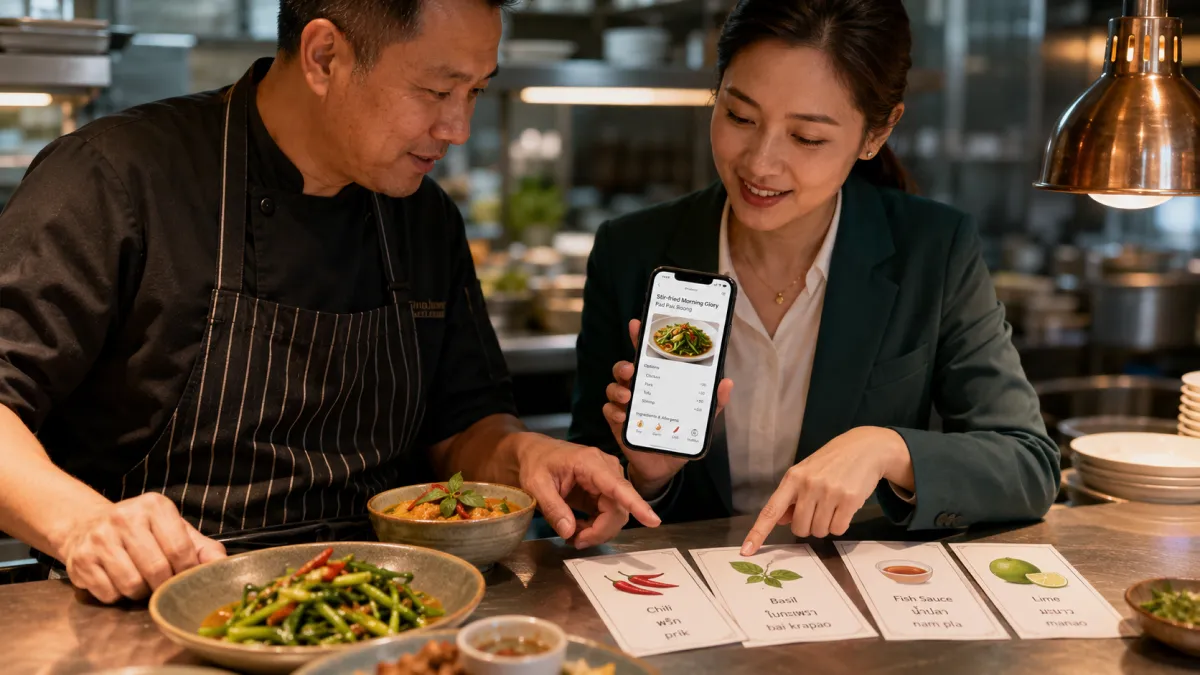
This glossary becomes the restaurant's translation memory in practical form. It keeps "holy basil", "fish sauce", "shrimp paste", "pandan", "sticky rice", "condensed milk", and signature dish names consistent across languages.
Step 4. Generate the AI draft
Translate category names, item names, descriptions, options, and labels. Keep the original language visible where useful. For tourist menus, the best display is often:
Original dish name + translated explanation
That lets local identity and guest understanding work together.
Step 5. Review high-impact fields first
You do not need to spend equal time on every word. Review in this order:
- allergens and dietary tags;
- signature dishes;
- premium items;
- spice and preparation notes;
- option labels;
- category names;
- simple drink and side dish names.
Step 6. Publish in a mobile-first QR menu
Do not make guests download an app or zoom into a PDF. Put the translated menu behind a stable QR code that opens quickly on a phone.
A good QR menu should:
- load fast on mobile data;
- show clear language switching;
- keep categories easy to scan;
- support item photos;
- display options and notes cleanly;
- allow the restaurant to edit translations after publishing;
- keep the same public URL even when the menu changes.
That is where iMango fits naturally. It gives restaurants a stable public QR menu, editable content, multilingual presentation, and a simple admin workflow for keeping menu information current. See how owner-reviewed menu translation works inside the admin forms.
How AI translated menus increase confidence and sales
The business case is not "AI translation increases revenue automatically." The real case is more grounded: better understanding improves ordering confidence, and confidence affects what guests choose.
An AI translated restaurant menu can help sales in five ways.
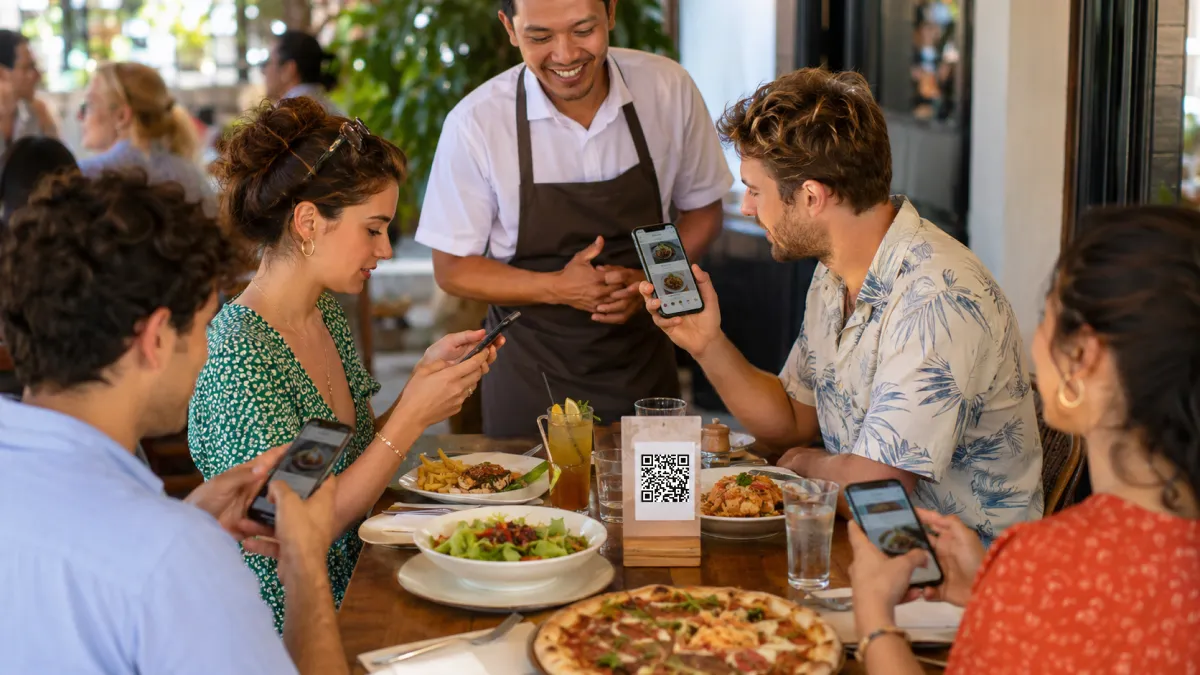
1. Tourists explore more dishes
When guests understand a local dish, they are less likely to fall back to the safest item. A translated description and photo can make a signature dish feel approachable.
2. Staff spend less time translating
Servers still matter. They create hospitality. But they should not have to translate the same ten dishes at every table during a rush. A multilingual menu handles repeat questions so staff can focus on service.
3. Premium items feel less risky
A guest may avoid a higher-priced dish if the translation is vague. Clear ingredient, portion, and preparation notes make the price easier to trust.
4. Allergen and dietary information builds trust
Guests with food allergies or dietary restrictions are careful, especially abroad. Clear translated notes can reduce anxiety and prevent avoidable confusion.
5. Digital updates prevent stale translations
The sales benefit disappears if translated menus fall out of sync. A paper English menu with last month's prices is worse than no translation because it creates distrust. A digital menu lets the restaurant update the live source and review translated fields as the menu evolves.
What not to do with AI menu translation
Avoid these mistakes:
- publishing raw AI output without review;
- translating dish names literally when the local name should stay;
- hiding the original dish name from tourists who know it;
- using vague claims such as "vegetarian" or "gluten-free" without kitchen verification;
- translating only names and leaving options untranslated;
- using tiny PDF menus on mobile;
- adding every possible language before the main ones are correct;
- letting translated menus drift from the current menu.
The best translated menu feels simple to the guest because the restaurant made careful decisions behind the scenes.
Conclusion: translation is hospitality, not just automation
An AI translated restaurant menu is valuable because it makes a restaurant easier to enter for people from other countries. It says: you are welcome here, and you can understand what we serve.
The best restaurants will not treat AI translation as a shortcut around care. They will use it to remove repetitive work, then spend human attention where it matters: local names, allergens, cultural context, signature dishes, and guest trust.
For global diners, that is the difference between guessing and ordering with confidence. For restaurants, it is the difference between being technically available to tourists and actually ready to serve them.
FAQ
Is an AI translated restaurant menu accurate enough?
It can be accurate enough for many menu fields when the source menu is clear and structured, but important content should be reviewed. Always check allergens, dietary claims, signature dishes, premium items, spice levels, and local culinary terms before publishing.
Should restaurants translate local dish names or keep them?
Usually, keep important local dish names and add a clear explanation. For example, "Som tam - green papaya salad with lime, chili, fish sauce, tomato, long beans, and peanuts" is better than replacing the name with only "papaya salad."
Which languages should a restaurant menu support first?
Start with the restaurant's base language and English, then add languages based on real guest demand. Tourist-heavy restaurants in Thailand often consider Chinese, Russian, Korean, Japanese, Hindi, Arabic, French, or German depending on location, hotel partners, reviews, and staff observations.
Can AI translation help restaurants sell more?
It can help when it makes dishes easier to understand and trust. Clear translations, photos, allergen notes, and options can make tourists more comfortable ordering unfamiliar or higher-value dishes. The result depends on menu quality, review quality, and the guest experience.
What is the best way to publish an AI translated menu?
Use a mobile-first QR menu rather than a static PDF. A digital QR menu lets restaurants update prices, availability, descriptions, and translations without reprinting or replacing table codes.